
Brand Idea
A live events and festival production brand
A parent brand for recurring events, festival editions and production work.
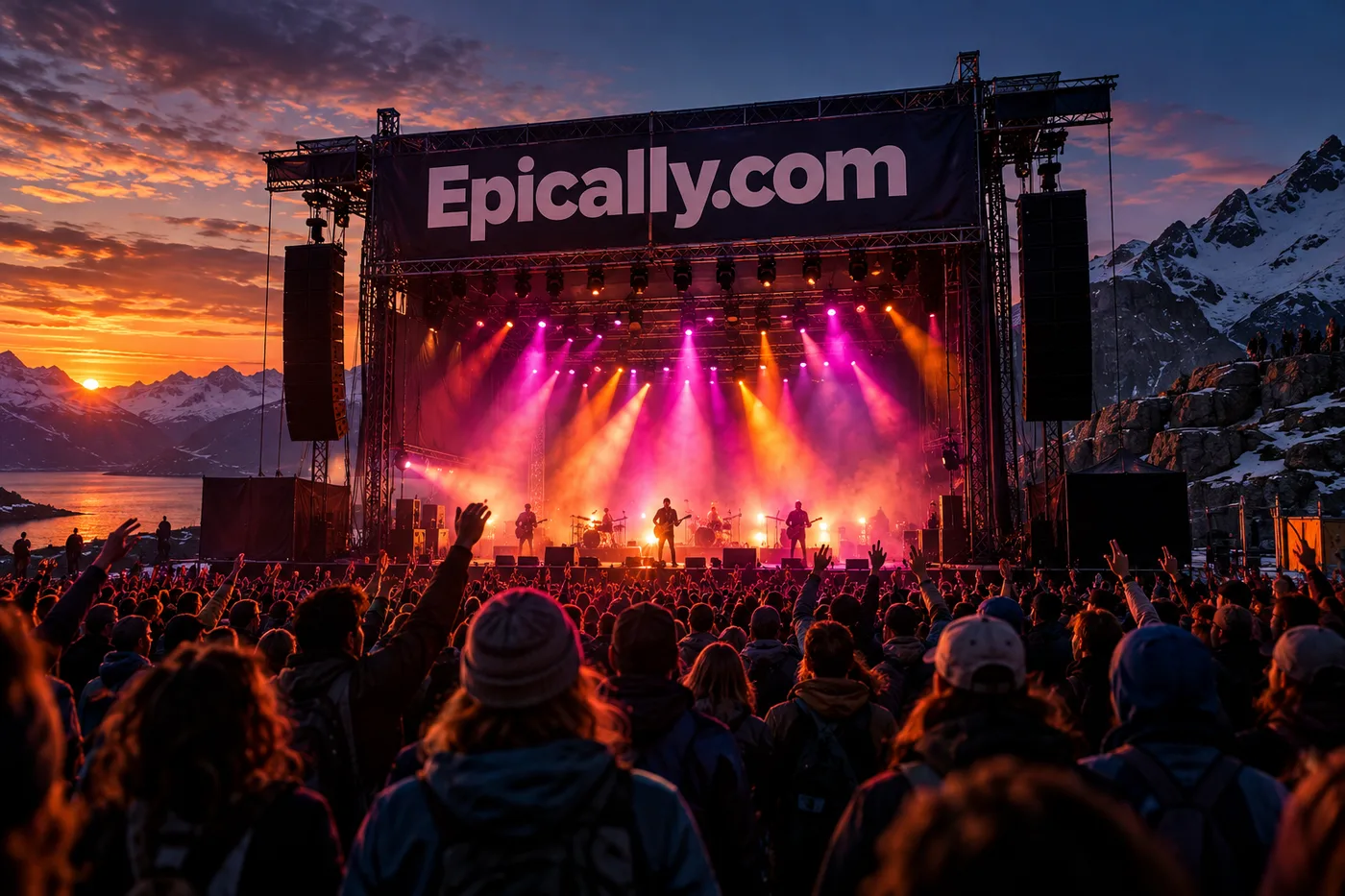
A live events business could use Epically as the name connecting its productions, with each event retaining a clear identity of its own. The appeal is a word that feels at home around shared experiences and large-scale staging. The challenge is to turn that feeling into useful information for attendees, collaborators and clients. This is an illustrative concept, not an announcement of a festival, a ticket offer or a claim about an existing production company's work.
Decide what the business produces
The first distinction is between owning events and producing them for others. An operator may eventually do both, but a visitor needs to understand the offer in front of them. A public festival needs an attendee-facing site with program and access information. A production service needs an explanation of scope, responsibilities and relevant work. Placing both under Epically could be sensible if the navigation makes those different relationships easy to understand.
For an initial concept, imagine a recurring cultural event with a defined musical or creative focus. Its audience would need a reason to choose that particular gathering. The parent brand supplies continuity; the program supplies the reason to attend. A specific curatorial idea gives the team something to develop across editions and gives partners a clearer understanding of the event's character than a broad promise of an epic night.
Create a naming system that survives editions
A recurring event can keep its core title while changing the year, location or edition descriptor. That makes it easier to recognize returning programming and distinguish current information from an archive. An illustrative structure might place the event title first, followed by the city and edition year. Epically would appear consistently as the producer. The format should remain understandable when read aloud, printed on a ticket or reduced to a compact mobile heading.
Sponsor names need their own place in that hierarchy. A presenting relationship should not make the underlying event impossible to recognize when the relationship changes. The website can separate the stable event title from a clearly labeled sponsor credit. The actual wording depends on the agreement and should be reviewed by the responsible parties. Planning a slot in advance is useful; implying that a sponsor has committed before it has done so is not.
Tell the ticket-page story in order
An event page should quickly establish the experience, date, location and current status. Program details can follow, together with practical information about entry and access. If tickets are available, the buying route should explain the relevant ticket types and terms. If the event is still in development, the page should say so and offer an appropriate next step. An attractive countdown or a dramatic stage image cannot substitute for an accurate description of what has been confirmed.
Attendees also need information that does not fit into a promotional headline. Arrival guidance, venue accessibility, age restrictions, permitted items and support contacts should be easy to locate when relevant. The operator would need to verify those details for the actual venue and edition. A consistent information structure helps a returning visitor find an answer without relearning the page. It also gives the production team a checklist of facts that must be maintained.
Make the production story concrete
If the business offers production services, it could explain work in terms of responsibilities: creative development, technical coordination, artist liaison or on-site delivery, where those services are actually offered. A project account should distinguish the company's role from the work of collaborators. Photographs should be used with appropriate rights and accurate captions. A new operation can explain its proposed approach without inventing a portfolio, client list or attendance record.
The parent brand could give these accounts a consistent visual home. A project page might describe the brief, the constraints, the decisions and the completed scope. That sequence helps a prospective client understand how the company thinks about an event. It also creates a useful boundary around the claims being made. Saying exactly which part of a production was delivered is more informative than attributing every successful element of a large event to one company.
Plan distribution around real milestones
An event has several different communication moments. An initial announcement establishes the premise. A program release adds reasons to attend. Practical updates prepare people for arrival. A recap can preserve the work and point toward a future edition when one is confirmed. Each moment needs current facts and a clear destination. The website should remain the place where visitors can check which details still apply, especially when older social posts continue to circulate.
Possible distribution channels include relevant local publications, artist communities, partner newsletters and the event's own subscriber list. Their usefulness depends on the specific audience and location. A promotion aimed at everyone is difficult to evaluate. The team should decide which people it needs to reach and what those people need to know. Media materials should distinguish confirmed program details from proposals and provide a contact who can answer practical questions.
Keep the archive useful
After an event, the page can become an archive with a visible past-edition label. That preserves photography, credits and program information while preventing confusion about current ticket availability. A separate upcoming page can carry the next confirmed edition. Stable URLs and clear dates help people follow the series across years. The design should make the difference apparent without requiring someone to notice a tiny date buried near the bottom.
Before pursuing the domain, try Epically in an attendee announcement, a production proposal and an event credit. Does it support the intended tone across those situations? Can the event title remain distinctive beneath it? An acquisition inquiry can describe the proposed production business or event family and the role the domain would play. The next step is a conversation about the name and its fit, rather than a purchase of a live event operation.
Could this be the name?
Discuss the intended use and acquisition of Epically.com.
Inquire about Epically.com